
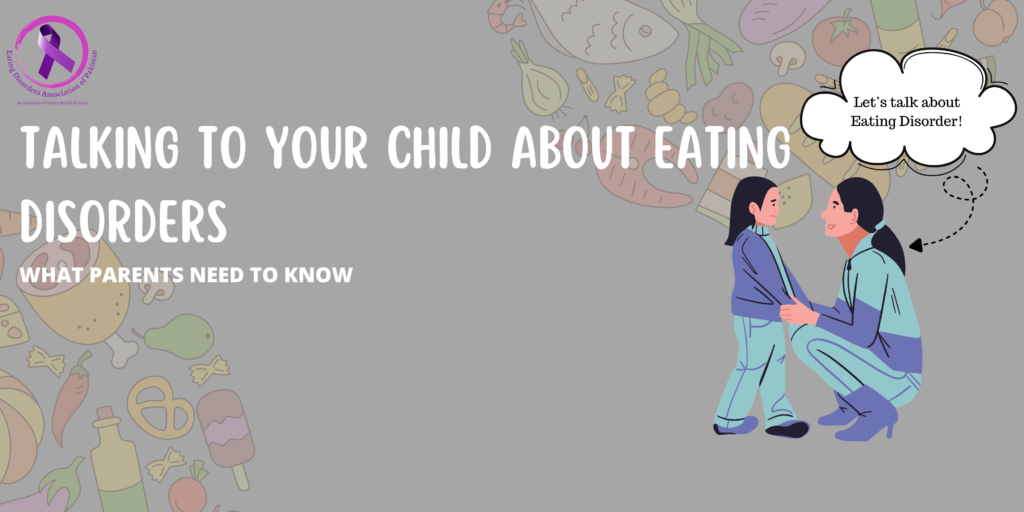
Talking to your child about eating disorders can be daunting. It’s a sensitive topic tied closely to self-image, mental health and societal pressures. But avoiding the conversation doesn’t make the issue disappear in fact, it can leave your child vulnerable to misinformation, shame, and isolation.
As a parent or caregiver, you are one of the most influential voices in your child’s life. Knowing how to approach this topic with empathy, knowledge, and openness is essential to helping your child build a healthy relationship with food, body image, and self-worth.
Why This Conversation Matters
Eating disorders like anorexia nervosa, bulimia nervosa, binge-eating disorder, and others—are serious mental health conditions that often begin during adolescence. According to global health studies:
- 1 in 7 adolescents may develop an eating disorder.
- Eating disorders have one of the highest mortality rates of any mental illness.
- Social media, peer pressure, and diet culture continue to normalize harmful behaviors around food and body image.
Starting a conversation early before problems escalate can make a significant difference in prevention, early detection, and recovery.
When and How to Start the Conversation
Start Early, Keep It Age-Appropriate
You don’t have to wait for signs of a problem to talk about eating disorders. Even young children can benefit from body-positive messages and a healthy understanding of food.
For younger kids, focus on:
- The importance of nourishing the body.
- All bodies being different and valuable.
- Encouraging respect for one’s own body and others.
For teens and pre-teens:
- Discuss body image, peer pressure, and media influence.
- Talk about emotional eating, restrictive behaviors, and self-esteem.
- Normalize the idea of asking for help when struggling.
Use a Calm, Non-Judgmental Tone
Choose a quiet, relaxed moment. Avoid accusatory or emotional language. Focus on care and curiosity, not control.
Try:
“I’ve been reading about how many young people are struggling with body image and food. How are you feeling about these things lately?”
Rather than:
“I noticed you’ve been skipping meals what’s wrong with you?”
What to Say (and What Not To)
Things to Say:
- “I care about your health and happiness, not your weight or size.”
- “You can talk to me about anything, even if it feels hard.”
- “Food isn’t good or bad, it’s fuel and joy.”
- “Your body is unique and amazing just the way it is.”
Things to Avoid:
- “You look healthier/thinner/bigger.” (Even well-meaning comments on appearance can trigger insecurity.)
- “Just eat more/less.” (Oversimplifies a complex issue.)
- “At least you’re not overweight.” (Reinforces harmful ideas about weight.)
- Any critical talk about your own or others’ bodies.
Recognizing the Warning Signs
Sometimes children won’t voice their struggles directly. Watch for subtle red flags:
- Skipping meals or hiding food
- Frequent negative comments about their body
- Excessive exercise or obsession with calories
- Isolation or mood changes
- Physical symptoms like hair thinning, fatigue, or menstrual irregularities (in girls)
If you notice these signs, don’t panic but do act. Open the conversation gently and seek professional help.
What If Your Child Is Already Struggling?
- Listen without judgment. Let them express how they feel without interrupting or rushing to fix things.
- Avoid blame. Eating disorders are not caused by bad parenting.
- Involve professionals. Reach out to a doctor, therapist, or registered dietitian with experience in adolescent eating disorders.
- Be patient. Recovery takes time. Celebrate small victories.
Creating a Body-Positive Home Environment
- Model positive behavior by avoiding diet talk or body shaming about yourself or others.
- Celebrate what the body can do, not just how it looks.
- Keep a variety of foods available and avoid labeling them as “good” or “bad.”
- Encourage emotional expression let your child know it’s okay to talk about sadness, anger, or stress.
Final Thoughts
Conversations about eating disorders are not easy, but they are necessary. You don’t need to be an expert you just need to be present, informed, and compassionate.
Talking openly about food, feelings, and body image creates a space where your child feels seen, safe, and supported. And that could be the most powerful step toward preventing or healing from an eating disorder.
Remember: You’re not alone. Help is available for your child and for you.