
What is binge eating disorder (BED)?
Binge eating disorder (BED) is a mental illness characterised by regular episodes of binge eating. Binge eating involves eating an excessive amount of food, which may take place in a rapid space of time or may be more of an extended grazing. These episodes can feel chaotic, uncontrollable and highly distressing.
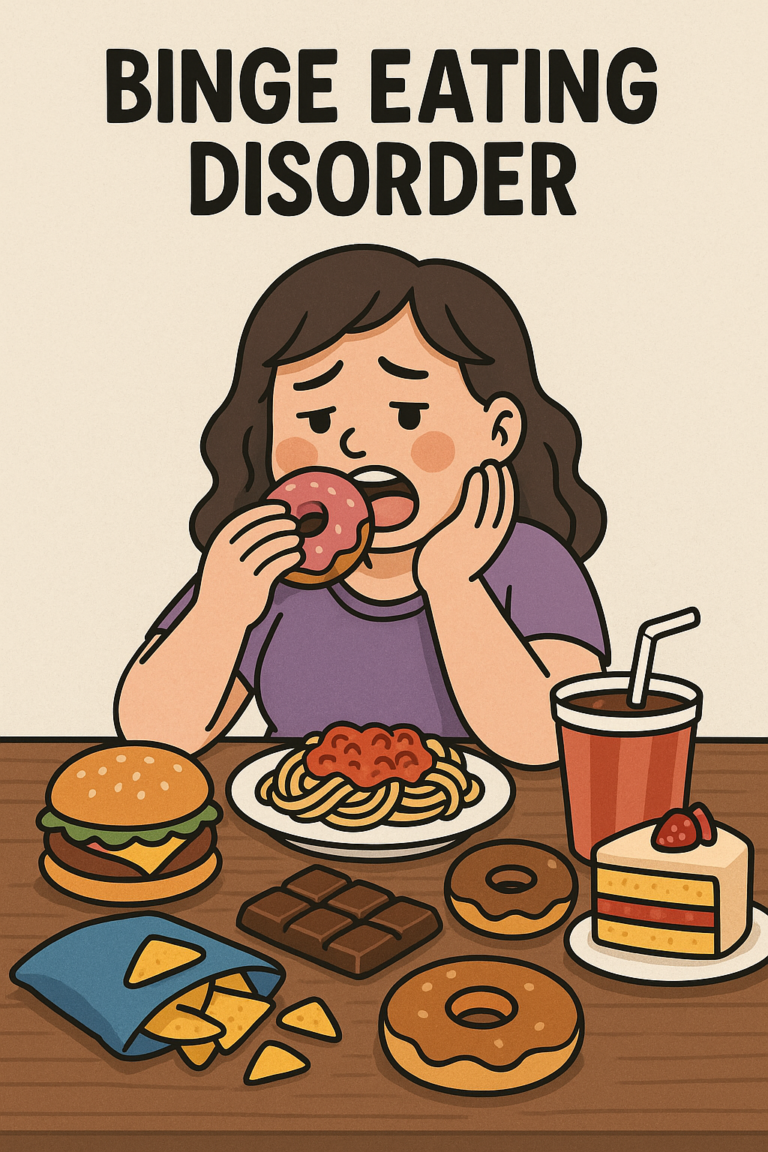
During a binge eating episode, a person may not be hungry, but may continue to eat past the point of feeling comfortably full. It is common for people to binge eat alone or in secret, and experience intense feelings of guilt, shame, disgust and low mood after a binge. When identifying binge eating disorder, it’s important to remember that:
- BED is a serious mental illness which affects more people than any other eating disorder
- BED affects men and women roughly equally
- BED can present differently for different people and impacts people in all body shapes and sizes
- BED can often be downplayed as ‘emotional eating’, which can prevent people from seeking help
- BED is serious and requires professional support
How is a binge different to overeating?
Overeating is part of being human – we can overeat naturally in social settings (e.g., Christmas lunch) or alone (e.g., a night in with Netflix and takeaway). By choice or accident, overeating is when someone eats past the point of comfortably full. We may overeat because food is present, because the food we are eating is pleasurable, we are bored or distracted, or because it soothes or comforts us (e.g., when feeling sad, overwhelmed or after a tough day).
A binge is different from overeating and is far more pervasive. It is the intense drive to overeat which is experienced again and again over time, accompanied by feelings of shame, guilt and feeling out of control. Binge eating is highly distressing and can affect a person’s ability to engage fully in aspects of life (e.g., work or school, recreational activities, socialising and relationships).
Similarities with bulimia nervosa
Binge eating disorder is similar to — but not the same — as bulimia nervosa. Where people experiencing bulimia nervosa will engage in compensatory activities after a binge eating episode (such as self-induced vomiting, fasting, over-exercising and/or the misuse of laxatives, enemas or diuretics), Binge eating disorder is characterised by an absence of compensatory activities, despite experiencing similar feelings of intense guilt, shame and self-hatred after a binge episode.
Like people with bulimia nervosa, there may be a strong desire to “make up” for the binge by being “good”, “healthy” or punishing oneself. This can lead to restrictive eating by engaging in long term dieting and sporadic fasts after a binge.
Risk factors for binge eating disorder
There is no single cause of binge eating disorder, but there are risk factors that increase the likelihood of anorexia developing. These can be biological, psychological and social.
Biological risk factors
Evidence tells us that all eating disorders have moderate-high genetic heritability. Ongoing research into this field is analysing hundreds of genes that may influence the chance of developing an eating disorder with the hope of improving treatment and even preventing illness.
Psychological risk factors
Some psychological factors increase the risk of developing binge eating disorder, such as feelings of inadequacy, a tendency toward all or nothing ‘black and white thinking’, negative emotionality, a fear or avoidance of conflict, low self-esteem, and impulsive or obsessive behaviours.
Dieting is also a significant risk factor on a psychological level. When people are on rigid diets, it is almost unavoidable to “break” the rules at some point. Once the diet has been broken, feelings of failure and self-blame can occur, leading to all or nothing or black and white thinking (e.g., “I have failed. Today is a write off so I may as well eat what I want today and start again tomorrow”). This can lead to a binge, particularly on foods that have been restricted while on the diet.
Social risk factors
Like all other eating disorders, the cultural emphasis on ‘thinness’ or smaller bodies as a moral and health imperative, along with the normalisation of intentional dieting, contributes to the valuation of individuals based on outward appearance. Not conforming to these narrow standards can lead to shame and subsequently, the development of eating disorders.
Food insecurity is a factor that may trigger a survival response to seek and hold food. Some examples may include children in unstable living situations who hoard/hide and binge when food is readily available (e.g. after entering care). For people who have experienced food insecurity as children or during their life (e.g. homelessness or financial hardship), there is an increased risk of binge eating disorder, even when food is secure.
Unmet needs
Unmet needs can also be a driver for binge eating. These needs may be emotional, psychological, social, professional, spiritual, physical or pleasure. Whatever it is, a binge eating episode can be a sign that your needs are not being met.
Some examples of unmet needs may include:
- Not being seen or heard by peers or family
- Working in an unfulfilling role
- Experiencing depression/anxiety, burnout, boredom, a stressful living situation
- A sense of a lack of control over future
- Being socially isolated.
A binge may initially soothe these unmet needs but may exacerbate them by adding feelings of shame, disgust and low self-worth.
Symptoms of binge eating disorder
Some of the more common signs and symptoms of binge eating disorder are listed below. Remember, binge eating disorder is a mental illness. You can’t tell if someone has an eating disorder based on physical appearance alone.
Mental health symptoms
- Feeling out of control around food
- Concern about weight gain following a binge eating episode
- Feeling high, numb or dissociated during a binge eating episode
- Feeling desperate to break the cycle of binge eating
- Repeated episodes of binge eating which often results in feelings of shame or guilt
- Low self-esteem and embarrassment over physical appearance
- Feeling extremely distressed, upset and anxious during and after a binge episode
- Fear of the disapproval of others
- Self-harm or suicide attempts
- Overly sensitive to references about weight or appearance
- Guilt, self-disgust, self-hatred
- Depression and/or anxiety
Behavioural symptoms
- Eating more rapidly than normal
- Chaotic, unpredictable eating patterns
- Eating in secret
- Periods of uncontrolled, impulsive or continuous eating, often to the point of feeling uncomfortably full
- Compulsively eating whatever food is available, regardless of how enjoyable it is
- Eating when not physically hungry
- Eating excessive amounts of “off limits” foods
Social symptoms
- Avoiding social situations, particularly those involving food
- Eating ‘normal’ quantities in social settings, and bingeing when alone
- Impaired school or work performance
Physical signs and effects of binge eating disorder
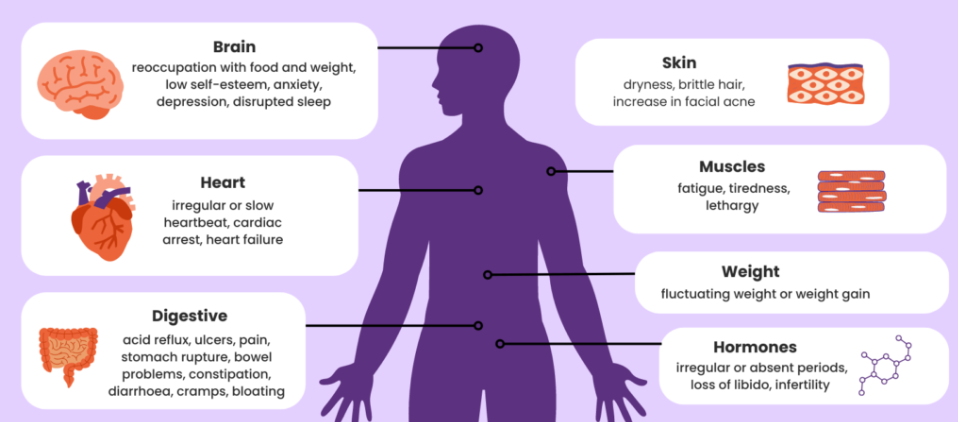
Binge eating disorder can affect the functioning of the entire body. The below graphic outlines some of the key systems and organs that can be impacted when someone is experiencing binge eating disorder.
Binge eating disorder and weight cycling
Because long-term dieting is associated with binge eating disorder, many people end up being caught in a cycle of losing and regaining weight throughout their lives. This is known as weight cycling and can be a significant stressor for the body.
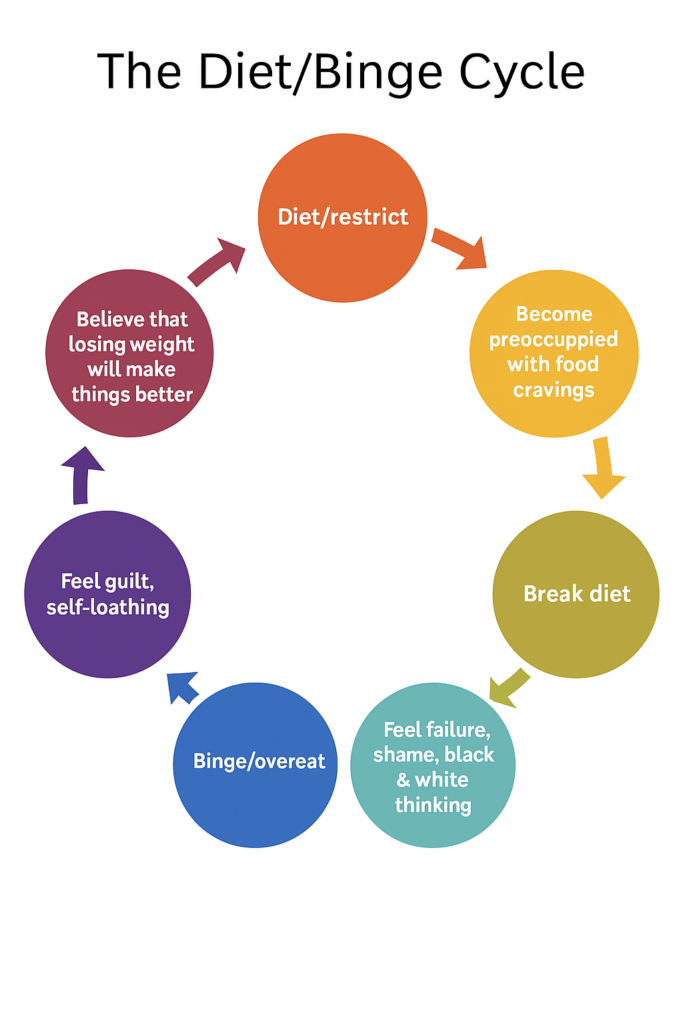
Weight cycling has consequences for physical health, but also has psychological consequences (riding the emotional ups and downs of losing and regaining weight), that are often exacerbated by comments from others (e.g. about changes in physical appearance).
While some eating disorders are more correlated with weight loss or low body weight, this is not often the case for binge eating disorder – it is common for people to experience weight gain or fluctuating weight. This does not mean that you shouldn’t seek help — remember, binge eating disorder is a serious mental illness that requires treatment and support just like other eating disorders.