
What is ARFID?
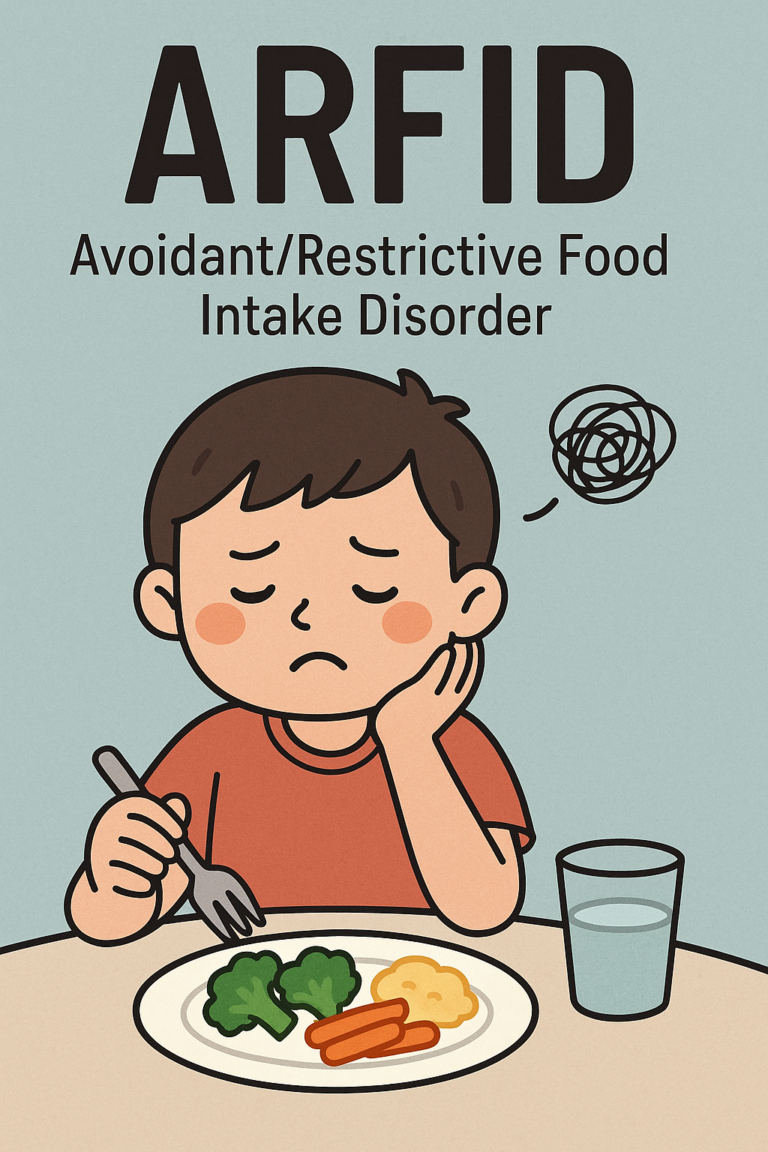
Avoidant/restrictive food intake disorder (ARFID) is the sensory based avoidance, fear or restriction of certain foods, due to sensitivities to texture, smell, temperature, or appearance of the food.
How is ARFID diagnosed?
A person may restrict the amount or type of a particular food or avoid a particular food based on factors such as the appearance of the food (e.g., colour, size, shape), texture, smell, temperature, or food group (e.g., all vegetables after a bad experience choking on a vegetable). They may also restrict food intake due to early satiety (i.e., prematurely feels full) or due to past experiences, such as trauma associated with a food experience (e.g., choking).
Defined by a pattern of eating that is limited in variety (e.g., avoidance of specific foods) and/or volume (e.g., restriction of amount), ARFID can cause a person to become seriously ill because their bodies aren’t getting all the nutrients they need. For example, individuals may experience medical or mental health consequences such as poor growth, diabetes, cardiovascular disease, fatigue, poor self-esteem, family mealtime conflict, peer social isolation, and difficulties with school, relationships and work.
How does ARFID present?
Diagnosis is associated with at least one of the following:
(1) Significant weight loss (or failure to achieve weight gain/physical growth in children);
(2) Significant nutritional deficiency;
(3) Dependence on tube feeding (supplying nutrients directly to the gastrointestinal tract) or oral nutritional supplements;
(4) Marked interference on an individual’s psychosocial functioning (e.g., impacts on daily activities).
Diagnosis is made if symptoms are not better explained by a concurrent medical condition (e.g., allergies, intolerances, other medical conditions), other mental illness (including other eating disorders, such as Anorexia Nervosa), a lack of available food or a cultural practice (e.g., Ramadan). ARFID differs from picky or fussy eating, which is common in childhood and generally resolves over time (e.g., food neophobia).
The food avoidance and restriction that define ARFID can lead to medical or mental health consequences that further exacerbate food avoidance and restriction and serve to maintain the illness. ARFID is persistent, more severe, can involve the restriction of both familiar and new foods, and has significant physical and mental health consequences.
Risk factors for for ARFID
There is no single cause of ARFID but there are risk factors that increase the likelihood of it developing.
Biological and psychological risk factors
ARFID and disrupted eating patterns around food are more common in young children with developmental disorders including autism spectrum disorders and ADHD. Research shows children with autism are five times more likely to develop issues associated with eating compared to their peers (Koomar et al., 2021).
Evidence also tells us that eating disorders have a moderate-high genetic heritability. Ongoing research into this field is analysing hundreds of genes that may influence the chance of developing an eating disorder with the hope of improving treatment and even preventing illness.
Signs and symptoms of ARFID
Mental health symptoms
- Fear of consequences associated with eating/feeding
- Appearing to be a ‘picky eater’, is fearful of, or has a phobia of certain foods
- No evidence of being preoccupied with body shape or weight but rather experiences anxiety about the food itself
- Anxiety and fear around food and/or eating
- Sensory sensitivity
- Overly sensitive to certain aspects of foods, focusing on taste, texture, smell, temperature or food group
- May feel prematurely full while eating
- Lack of interest in eating or food
Behavioural symptoms
- Not eating enough or skipping meals entirely
- Is not engaging in behaviours to attempt to control weight (e.g., lose weight, prevent weight gain, change body size/shape)
- Disinterested in food or forgetting to eat
Social symptoms
- Avoiding events where food will be served or becomes distressed when preferred foods aren’t available
- Impaired school or work performance