
Introduction
When we hear the term eating disorder, it’s tempting to reduce it to food habits eating too little, eating too much, or fearing weight gain. But that view only scratches the surface.
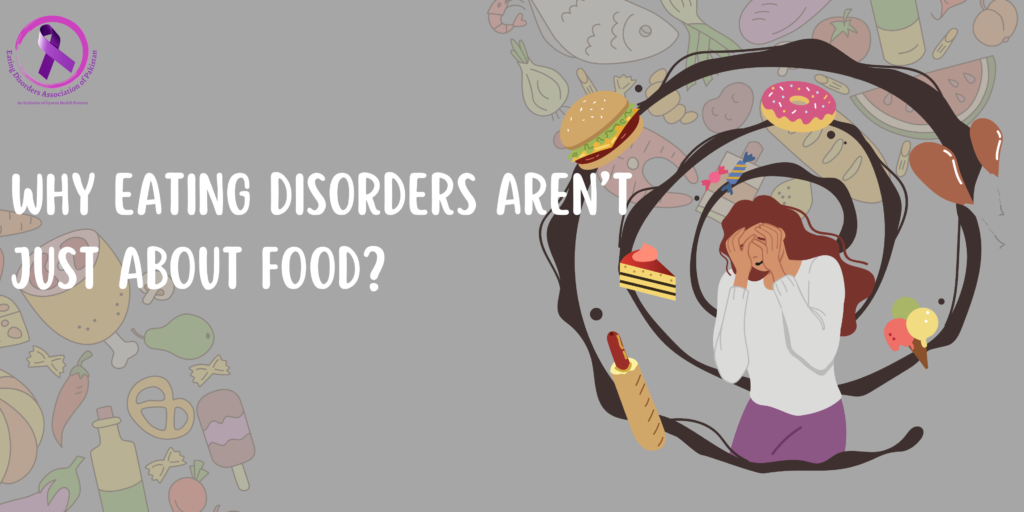
Eating disorders are not fundamentally about food.
They are complex mental health conditions with psychological, emotional, social, and even biological roots. Food is merely the expression not the cause of a much deeper internal struggle.
Understanding this distinction is critical to building empathy, improving treatment and supporting those who are suffering silently.
1. Eating Disorders Are Mental Health Conditions
According to the American Psychiatric Association and DSM-5 (Diagnostic and Statistical Manual of Mental Disorders), eating disorders like anorexia nervosa, bulimia nervosa, binge eating disorder, and avoidant/restrictive food intake disorder (ARFID) are classified as psychiatric illnesses, not dietary choices.
These disorders often co-occur with:
Anxiety
Depression
Obsessive-Compulsive Disorder (OCD)
Trauma-related disorders (e.g., PTSD)
Food behaviors are just a symptom. The underlying issues involve self-esteem, control, identity, emotional regulation, and sometimes even genetics.
2. It’s About Control, Not Calories
For many individuals, disordered eating arises in response to a life that feels unpredictable, overwhelming, or emotionally unsafe.
Control over food becomes a coping mechanism.
In anorexia, restriction may provide a false sense of discipline or stability.
In binge eating disorder, food might become a source of temporary relief or numbing.
In bulimia, purging is used to regain control after an overwhelming binge.
Clinical psychologists note that the need for control, rather than a desire to be thin, is often a root factor — especially in adolescents and trauma survivors.
3. The Role of Trauma and Emotional Pain
Research from organizations like NEDA (National Eating Disorders Association) shows a strong link between trauma and eating disorders.
Trauma may include:
Childhood emotional, physical, or sexual abuse
Bullying or fat-shaming
Grief or abandonment
High-pressure environments with perfectionism or neglect
These experiences create lasting emotional wounds, and food behaviors often serve as maladaptive coping mechanisms to manage deep emotional pain.
4. Diet Culture & Societal Pressure
While eating disorders are psychological in origin, social and cultural factors can fuel and sustain them — especially in women and girls, but increasingly among men and gender-diverse individuals.
Society often sends the message:
“Smaller = better”
“Beauty = thinness”
“Your worth = your appearance”
From a young age, people internalize these messages. Social media, advertising, and even “wellness trends” disguise restrictive eating as health or discipline. This external pressure can trigger or exacerbate a vulnerable person’s disordered relationship with food.
5. Eating Disorders Don’t Always Look the Way You Think
A critical and often overlooked fact: not all people with eating disorders are underweight.
People with atypical anorexia may be of average or above-average weight but still severely restricting and suffering internally.
Binge eating disorder, the most common ED in the U.S., is often invisible and misdiagnosed.
Many individuals suffer in silence because they “don’t look sick enough.”
This reinforces the idea that eating disorders are about mindset and mental distress — not just body size or appearance.
6. Recovery Isn’t Just About Food, Either
Healing from an eating disorder involves more than just eating more or less. True recovery addresses:
Emotional health: learning to regulate and express feelings without food
Cognitive patterns: unlearning harmful beliefs about self-worth and control
Body image: building neutrality or compassion for one’s physical self
Relational healing: repairing trust, boundaries, and communication in relationships
Nutrition education: learning to fuel the body without fear or obsession
Multidisciplinary treatment teams — often including a therapist, dietitian, and physician — are essential for long-term recovery.
Conclusion: Let’s Look Deeper
Eating disorders are not superficial problems or food fads. They are serious, multifaceted mental illnesses — and they deserve to be treated with the same gravity and compassion we extend to depression, anxiety, and trauma.
If you or someone you love is struggling, know this:
You are not alone, and help is available. Recovery is possible. And most importantly, your worth has never been tied to your weight, your diet, or your reflection.